Understanding solar power for remote cabins
A reference covering the core components of an off-grid photovoltaic system — panels, charge controllers, battery banks, and inverters — with context specific to Canadian climates and regulations.

Core Topics
How an off-grid system works
Every independent solar setup relies on four linked components. Each one affects how much usable energy a cabin can draw on any given day.
Solar Panels
Monocrystalline, polycrystalline, and thin-film panels behave differently in low-light and cold conditions. Canadian winters favour high-efficiency monocrystalline cells for sustained output during short daylight windows.
Charge Controllers
PWM and MPPT controllers regulate the voltage and current flowing from panels to batteries. MPPT units recover significantly more energy in variable irradiance conditions typical of northern latitudes.
Battery Storage
Lead-acid, AGM, and lithium iron phosphate batteries each have distinct charge cycles, temperature tolerances, and cost profiles. Sizing is determined by daily load and the number of autonomy days required.
Inverters
A pure sine wave inverter converts DC battery power to 120V AC for standard appliances. Modified sine wave units are cheaper but incompatible with some motors and sensitive electronics.
Canadian Climate Factors
Peak sun hours vary from under 3 per day in the Yukon in December to over 5 in southern Ontario summers. System sizing must account for the worst-case seasonal minimum, not the annual average.
Codes & Permits
Off-grid systems in Canada fall under the Canadian Electrical Code (CEC), Part I. Provincial authorities having jurisdiction (AHJ) determine inspection requirements. Most installations above a certain wattage require a licensed electrician.
Articles
Reference articles
Detailed breakdowns of each major system component, with practical sizing notes and Canadian-specific context.

Panels
Solar Panel Types for Off-Grid Cabins
A comparison of monocrystalline, polycrystalline, and thin-film panels in the context of Canadian off-grid applications — cold tolerance, output curves, and physical sizing.
Read article →
Wiring & Components
Off-Grid Wiring and System Components
How charge controllers, fuses, disconnects, and wiring gauge interact in a 12V or 24V DC cabin system. Includes reference to Canadian Electrical Code requirements.
Read article →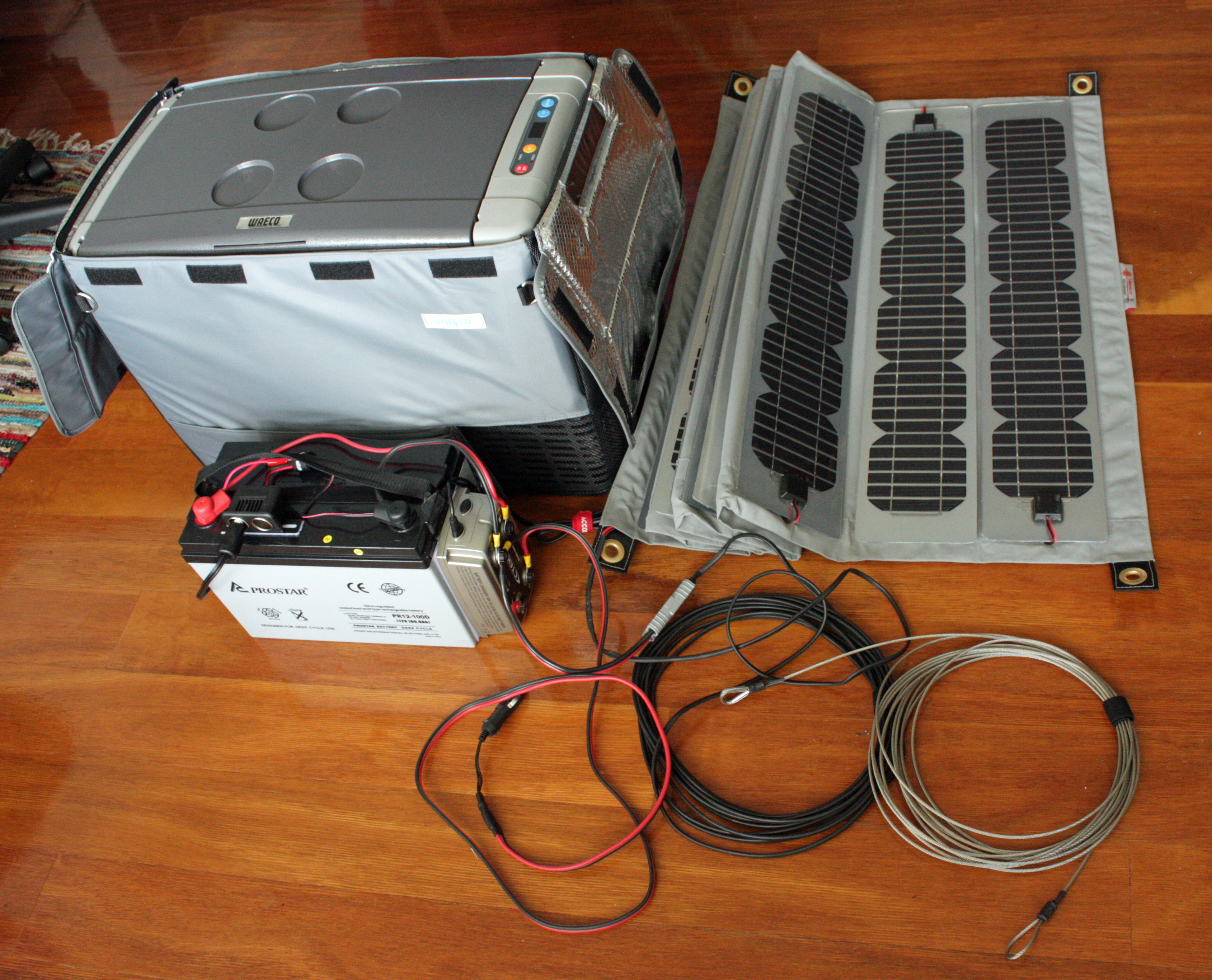
Battery Storage
Battery Storage and System Sizing
A walkthrough of how to calculate battery bank capacity, select chemistry for cold climates, and determine how many panels are needed to recharge reliably across seasons.
Read article →Reference-based, not promotional
All content draws on publicly available technical sources including Natural Resources Canada, the Canadian Electrical Code, and established solar engineering references. No products or vendors are endorsed.
About this project